September 2026
NJ Startup Signals
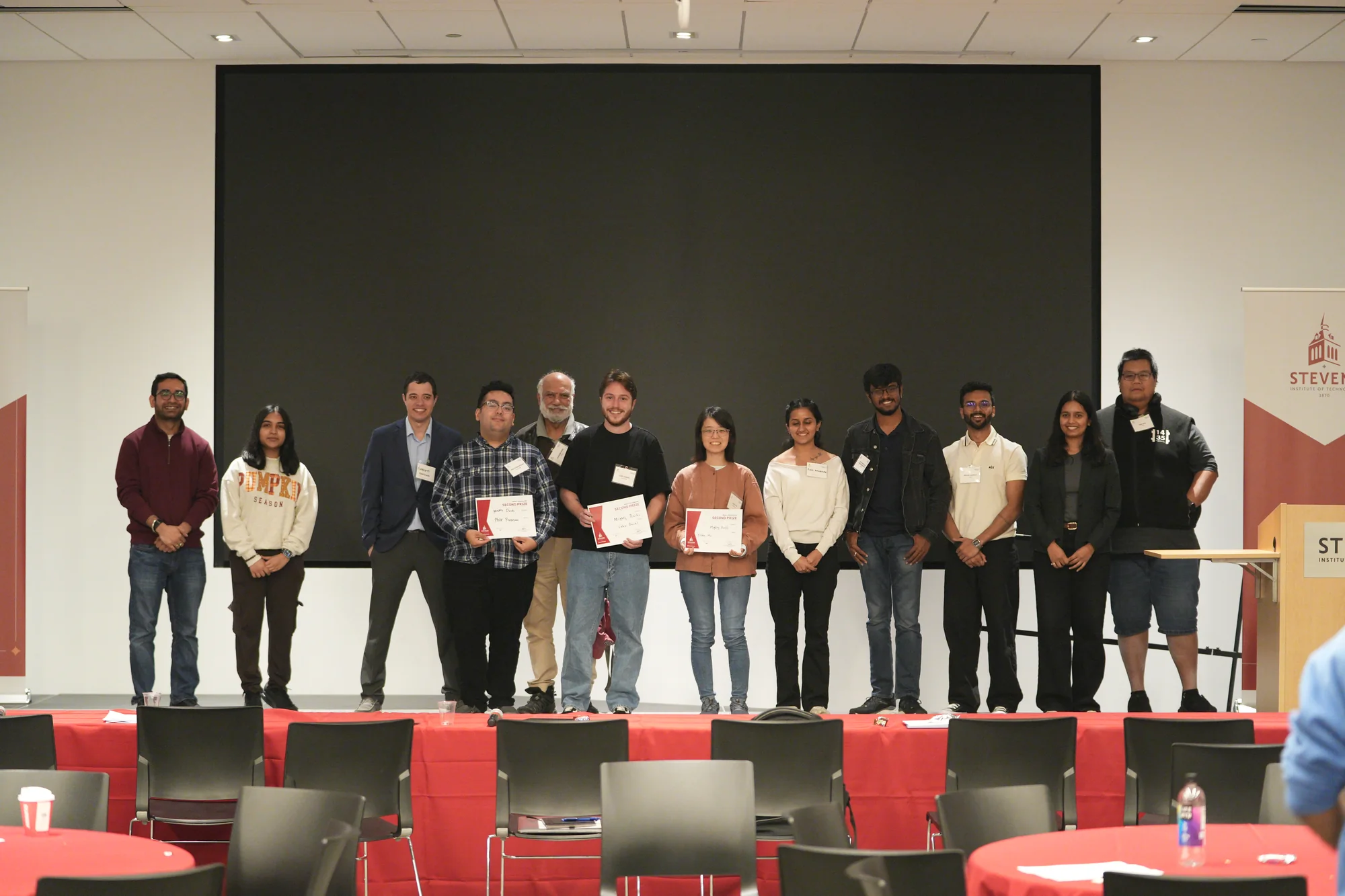
An interactive platform for exploring New Jersey startups through public evidence of funding, research activity, and patents. Second-place finisher at the Stevens Business + AI Hackathon.
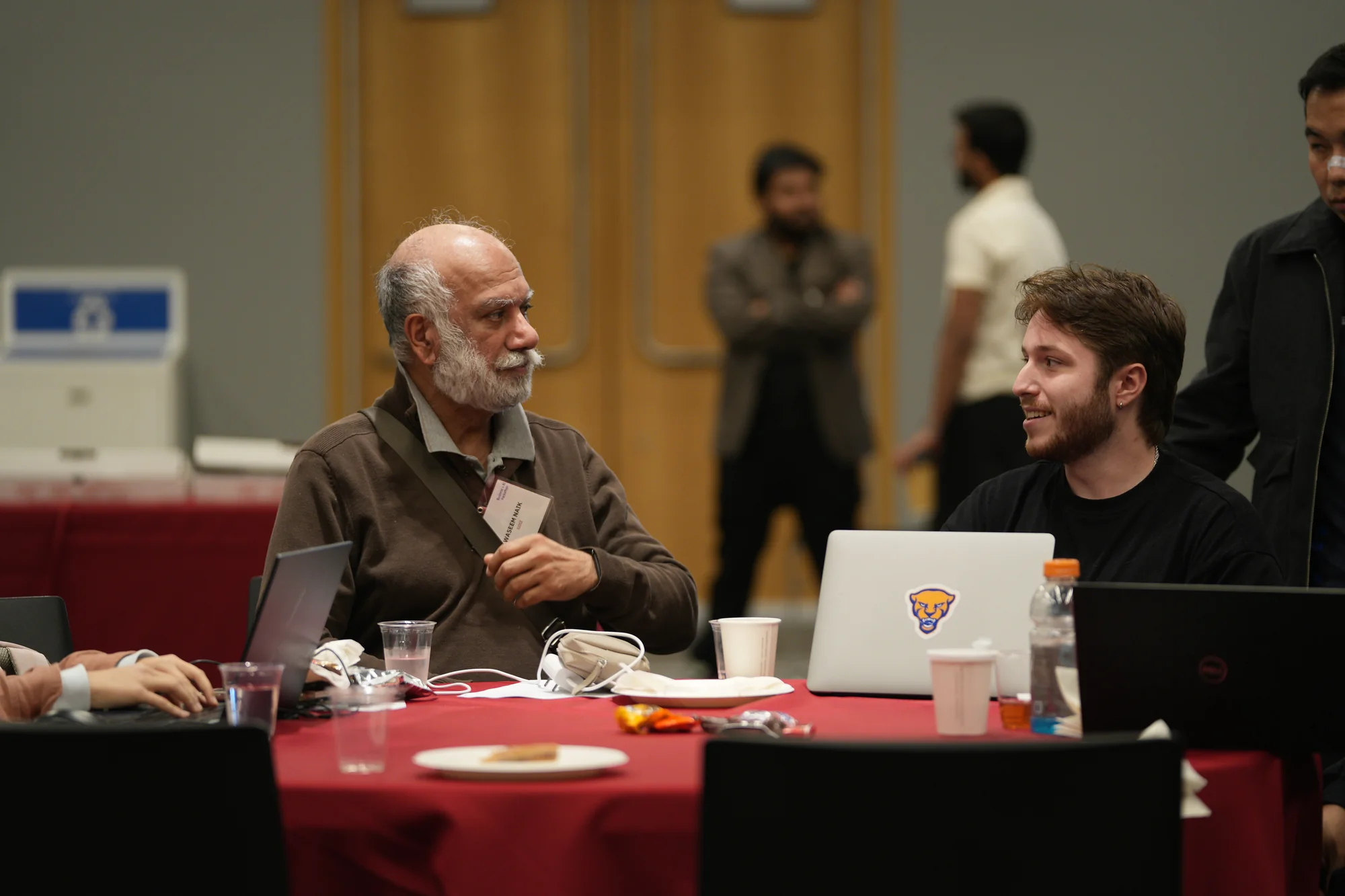
Stevens Institute of Technology | 1435 Capital Management | Business + AI Hackathon | 2nd Place
- TypeScript
- Supabase
- React
Project Overview
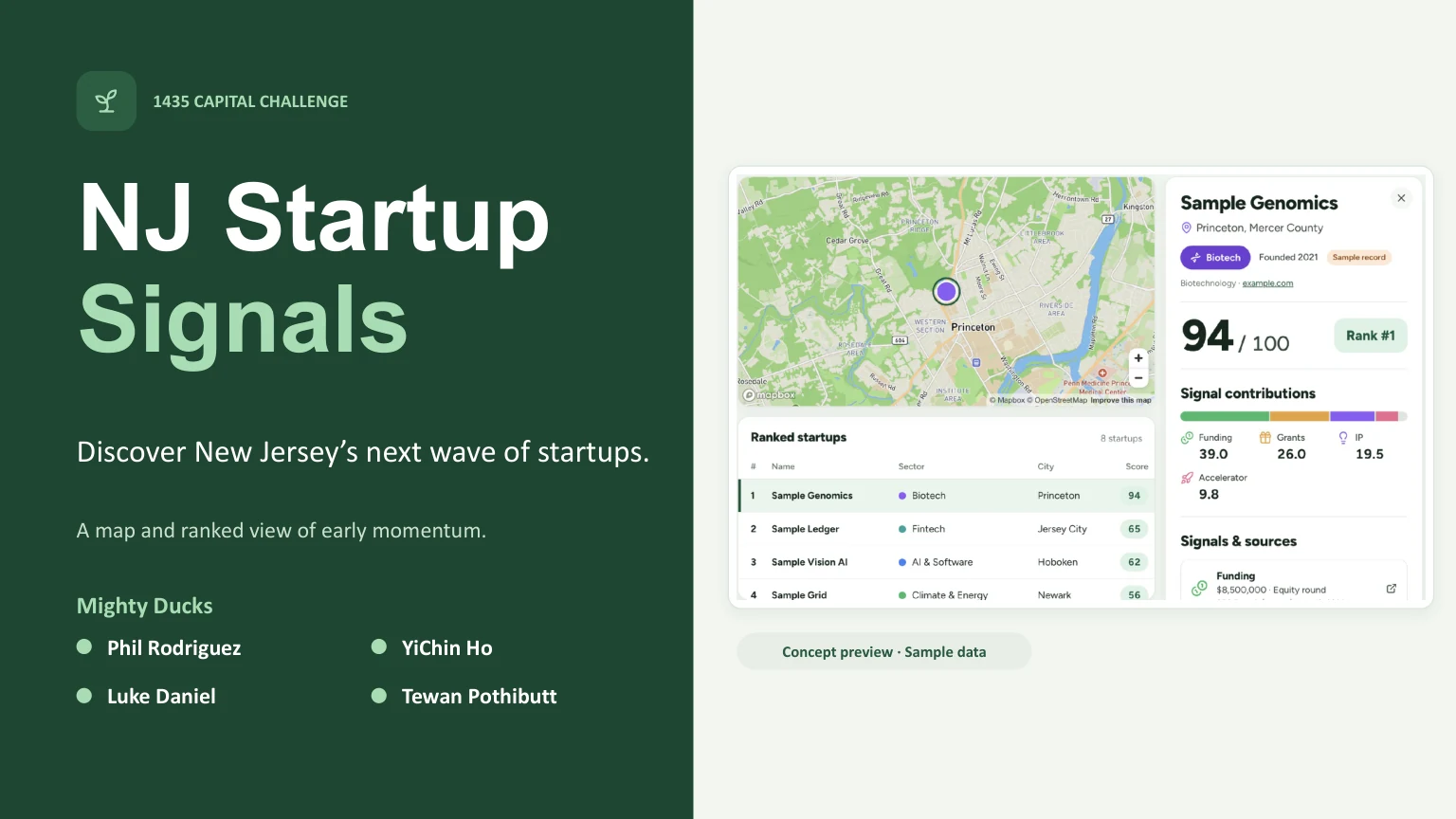
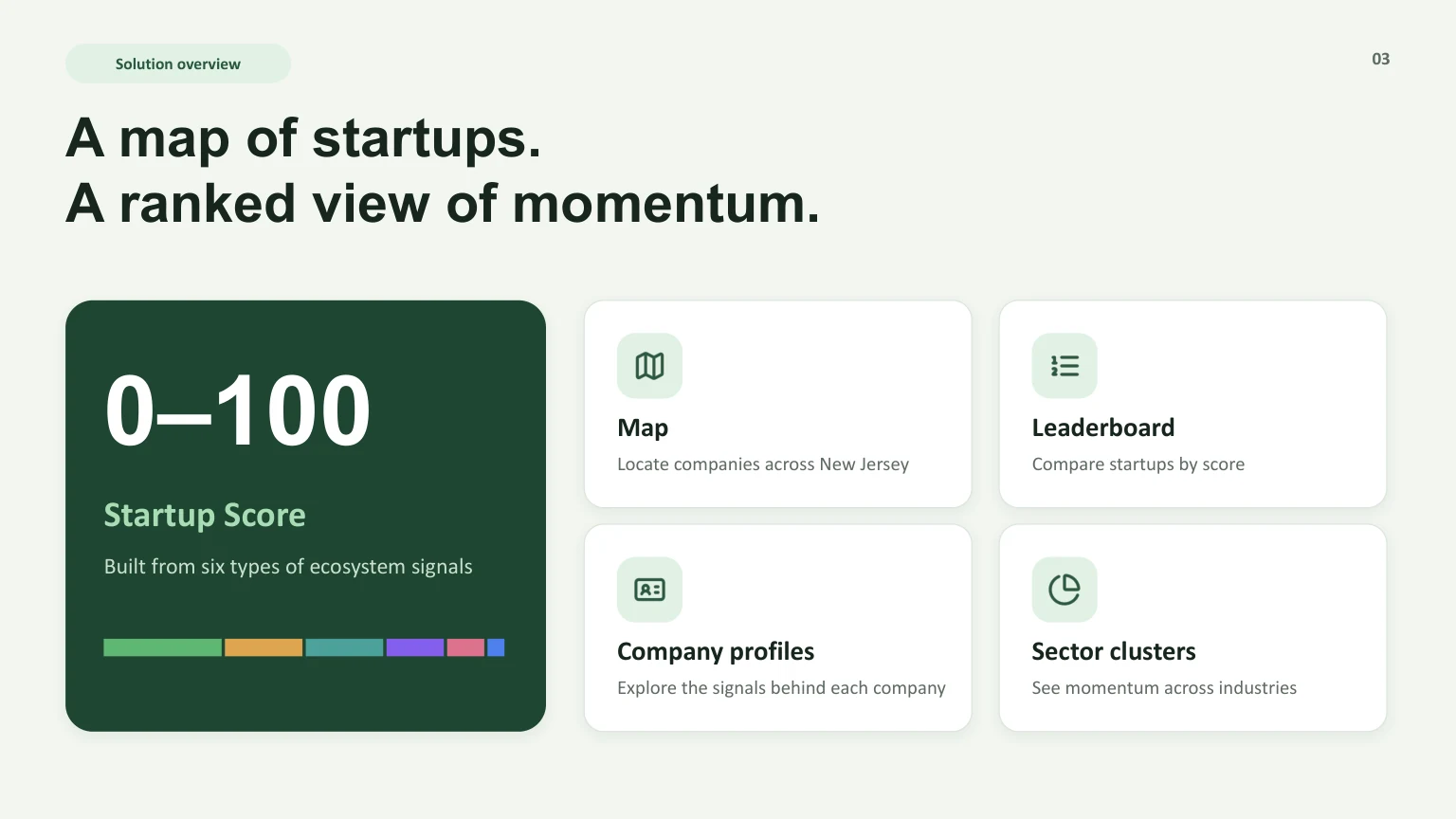
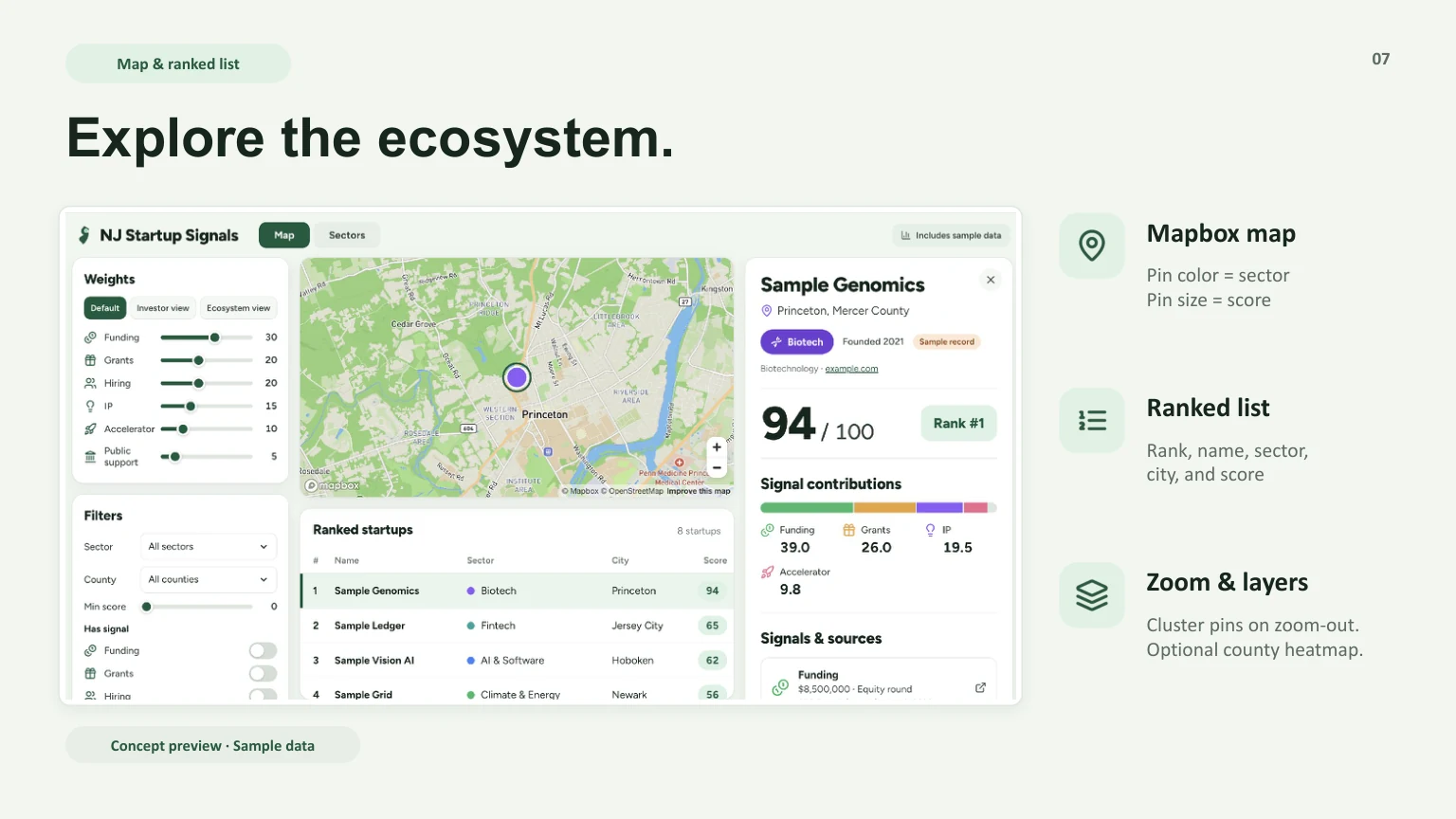
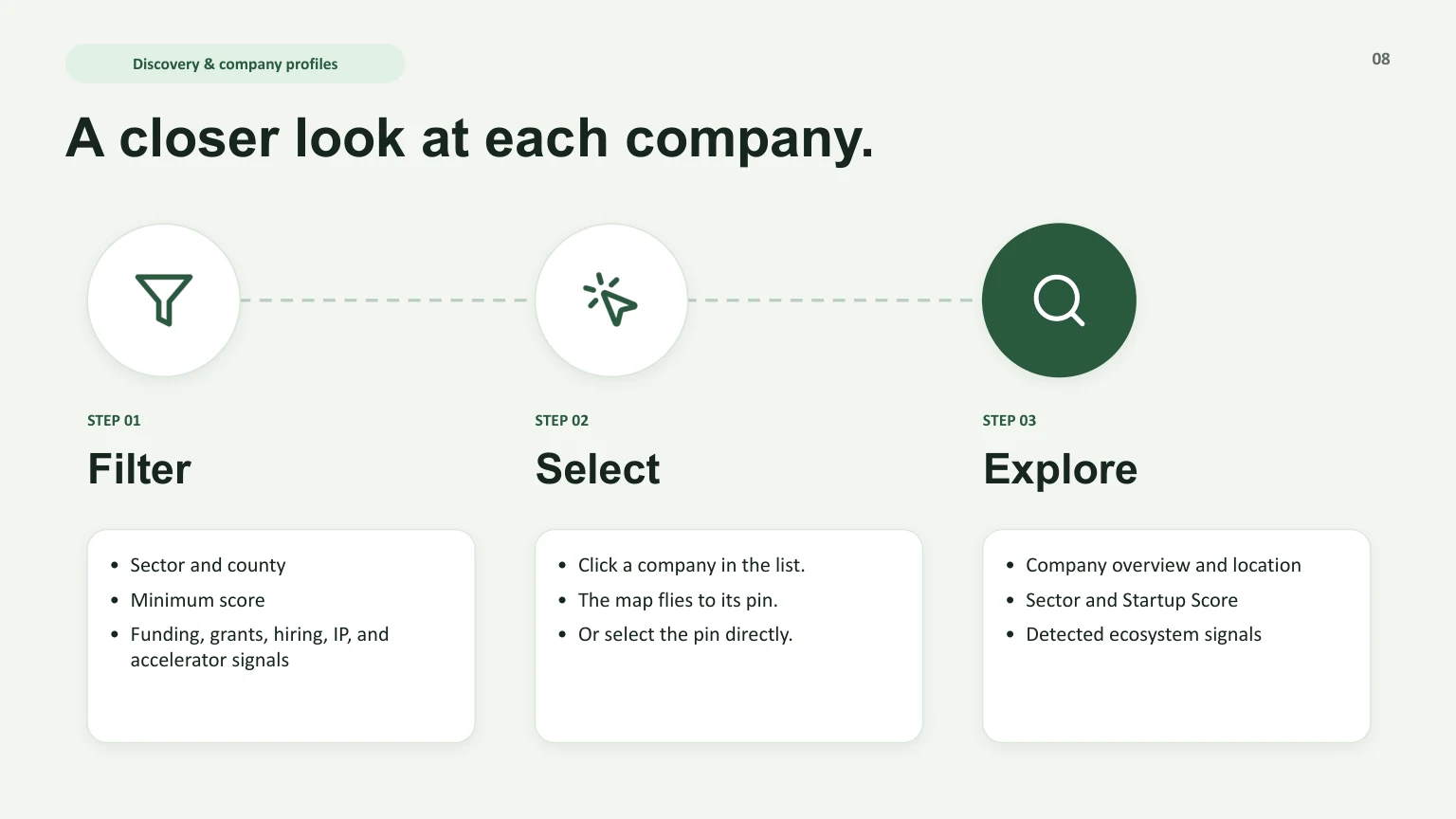
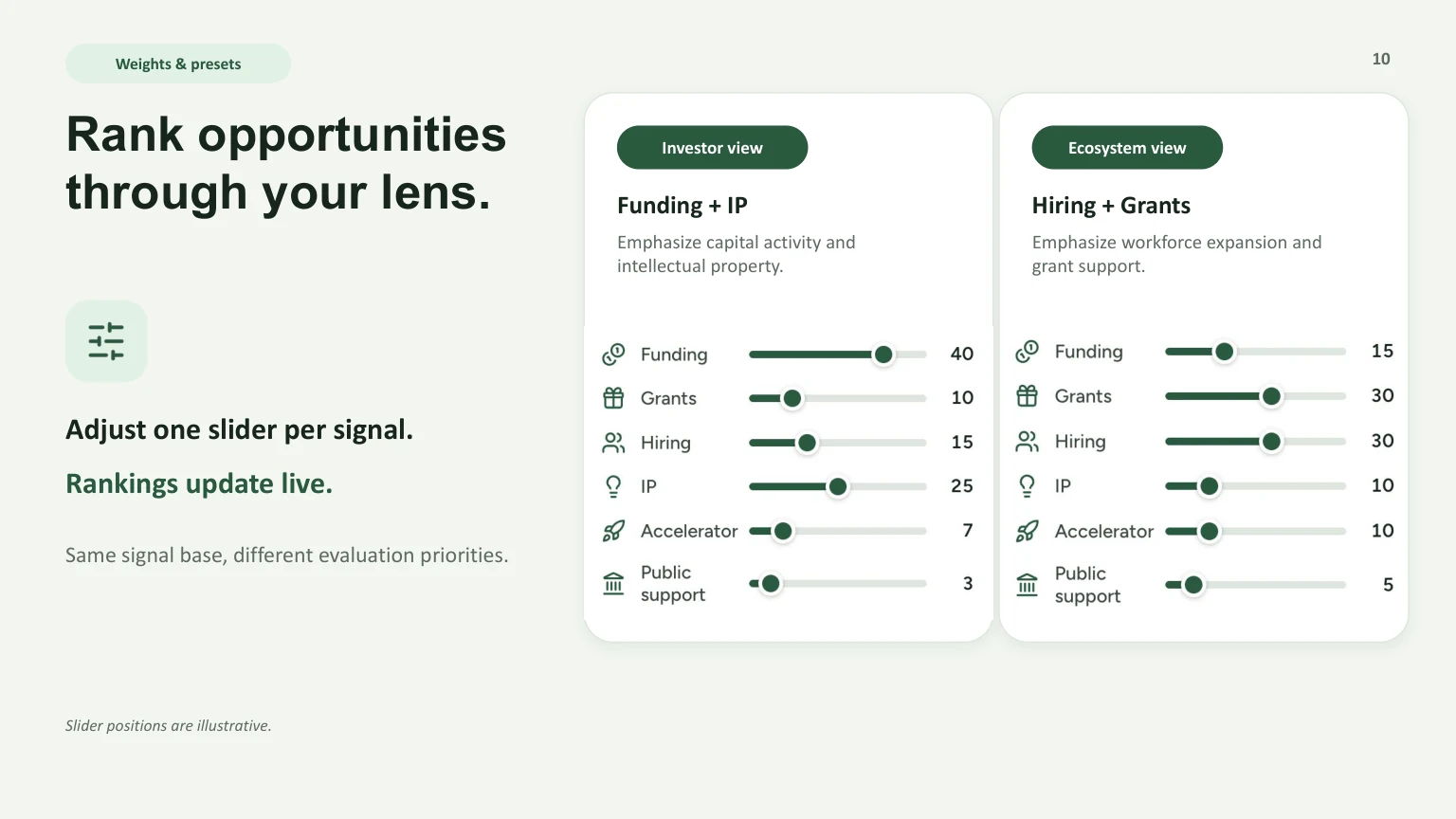
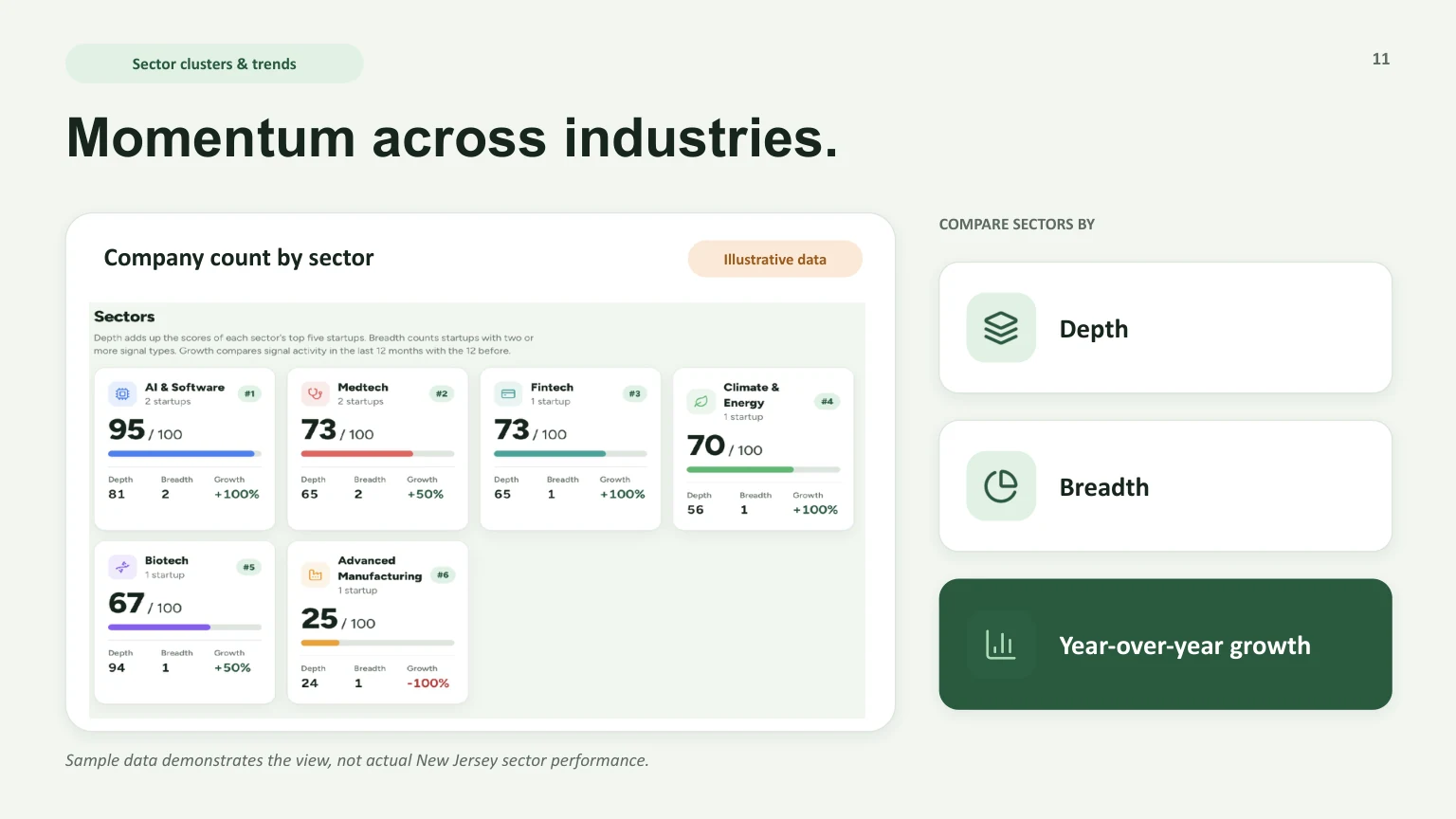
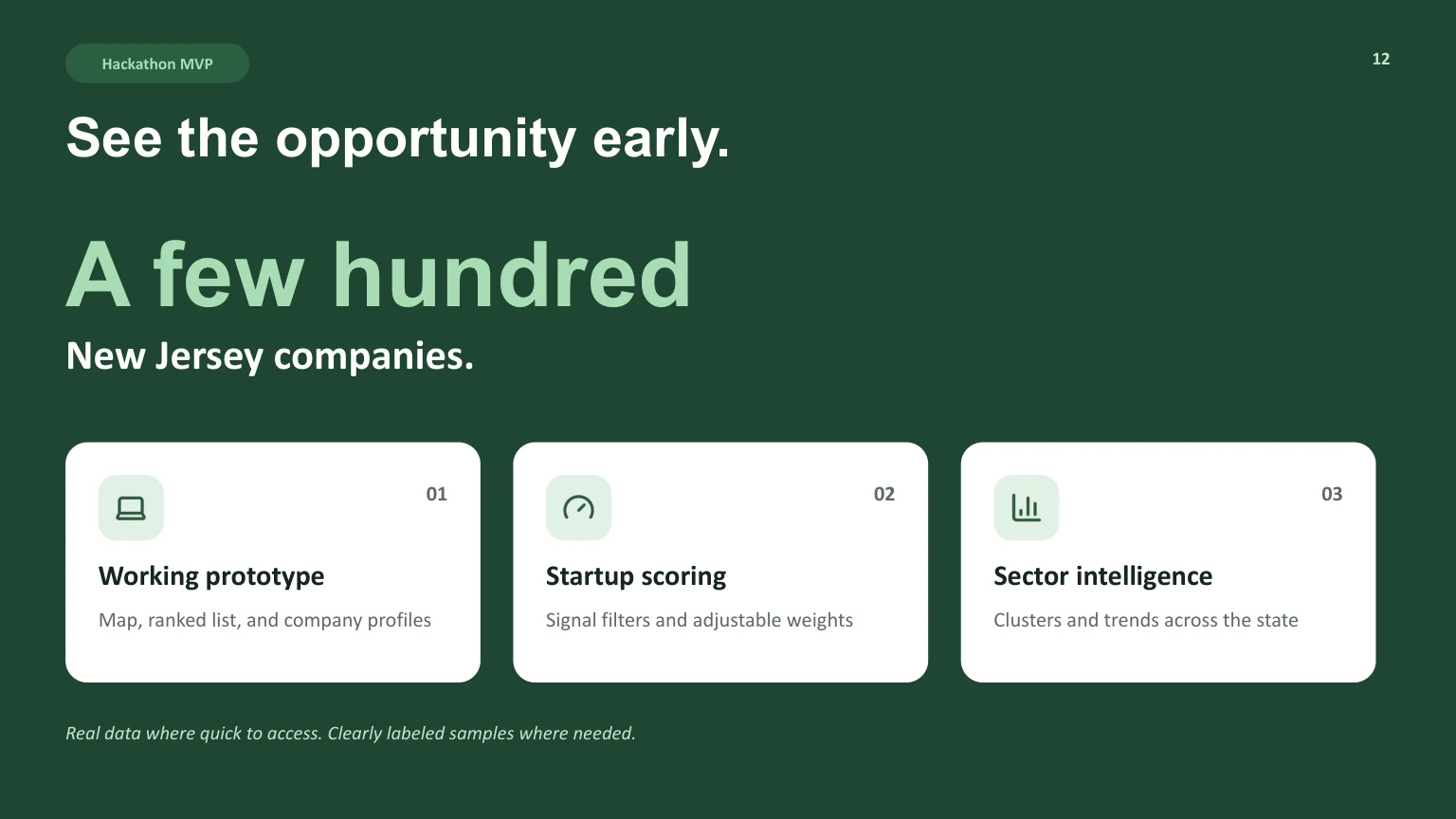
We built NJ Startup Signals during the Stevens Business + AI Hackathon for the 1435 Capital challenge, ultimately placing second. The app brings public signals about New Jersey companies into a map, ranked list, and sector view. Visitors can filter companies, adjust the weight of different signals, and open a company profile to inspect the underlying records and source links.
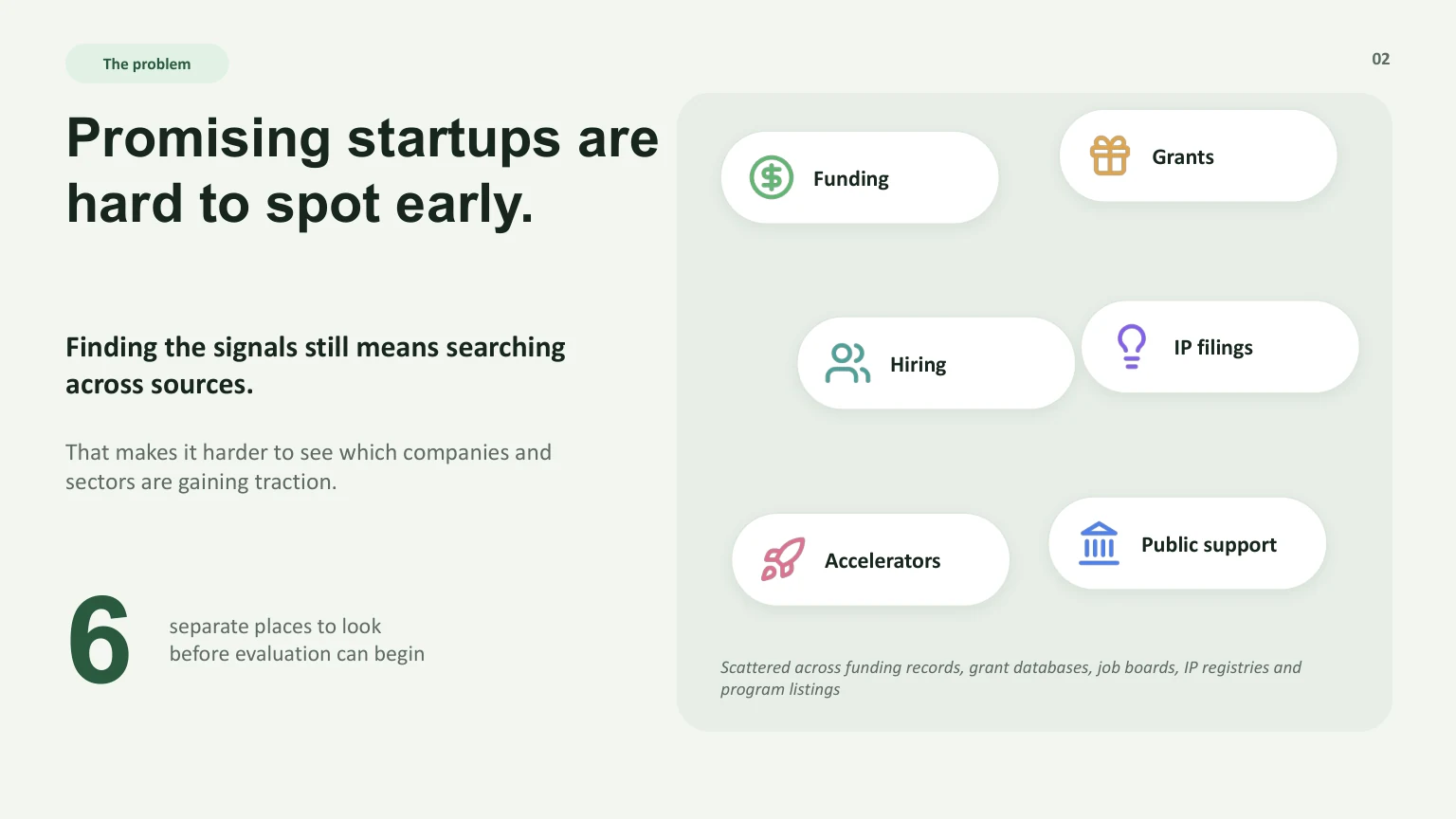
Hackathon Pitch
My Contributions
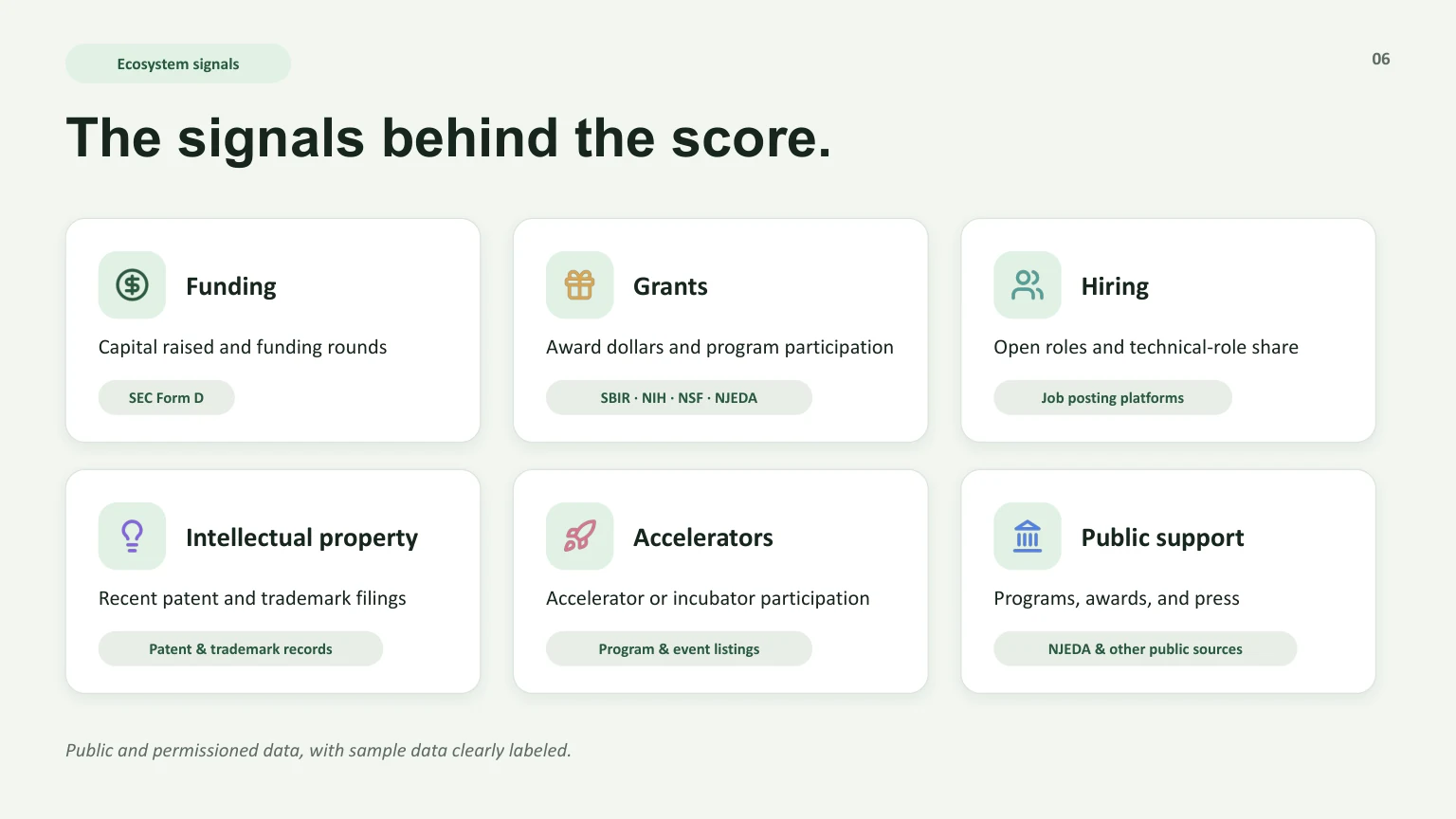
- Built the data pipelines. I found and connected public data sources, including SEC Form D filings, research grant records from the NSF, NIH, and SBIR, and USPTO patent records. I implemented the ingestion and processing steps that turn those different sources into company and signal data for the app.
- Set up the database. I configured the Supabase database and the data model for companies, source records, and published signals, so the app could serve traceable results rather than a static demo list.
- Connected the APIs. I built the Next.js backend endpoints that return ranked companies, company details, sector information, and data-source status. The frontend uses those endpoints to update results when visitors change filters and signal weights.
How It Works
- Collect public records. The backend pipeline imports available funding, grant, and patent data from the external sources.
- Link records to companies. Source records are processed and stored in Supabase with their provenance, then organized into signals for each company.
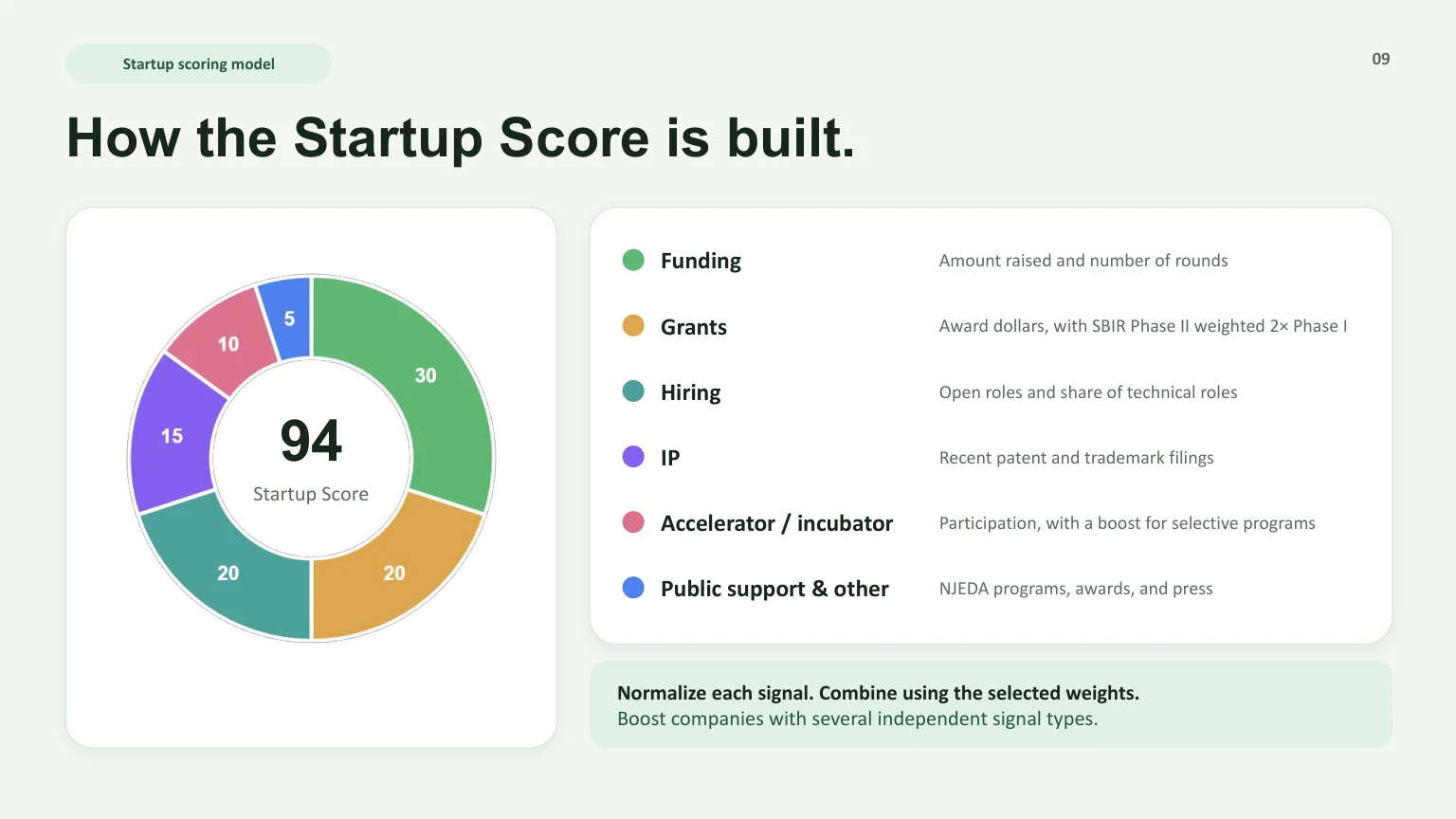
- Serve interactive results. The API scores and ranks companies using the visitor’s selected signal weights. The frontend presents the results on a map and in a list, sorted by score and visualized by sector.
Source coverage varies by company. The app separates live results from clearly labeled sample data, and its AI-generated summaries are a separate part of the team’s work.